The NFL General Manager: A Science Behind the Curtain Part 2
The second in a four part series about the role of the NFL General Manager and the science in which is integrated into building a team, managing the cap and forecasting the roster to build a perennial powerhouse.
MJ Campbell
3/2/20267 min read
How Contenders Stay Contenders
The GM Strategy Behind Sustainable NFL Winners
The hardest thing in the NFL isn’t building a good team once. It’s staying good. Asking yourself at the end of the year when the roster is being analyzed, "What kind of team are we"?
Perennial contenders operate in a completely different ecosystem than rebuilding teams. They’re not trying to create an identity — they’re protecting one while the rest of the league constantly attacks it.
Every offseason brings pressure:
Veterans age
Coordinators get hired away
Role players leave in free agency
Injuries expose thin depth
Draft picks transition from cheap labor to expensive extensions
This is where disciplined architects separate from aggressive gamblers.
The Model of Sustainable Contention
Kansas City Chiefs
After winning Super Bowl LIV, the Chiefs didn’t panic when veterans left.
Instead, they:
Rebuilt the offensive line immediately after the 2020 Super Bowl loss
Drafted and developed young defensive backs
Replenished EDGE depth rather than overpaying aging veterans
Allowed expensive role players to walk when value exceeded role
The result? Sustained contention, multiple Super Bowl appearances, and flexibility around their franchise quarterback. Andy Reid has been doing this a long time, and he knows what it takes to win. He knows what its like to build a team and to maximize your strengths and identify your pitfalls.
Lesson: Protect the premium core (QB + trenches), cycle talent underneath it.
GM's think holistically so they draft for need before it becomes urgent. Elite GMs think 12–24 months ahead and usually are planning their draft boards to match the pattern.
They ask:
Which veteran may decline soon?
Which starter will require an extension we may not want to pay?
Which role is becoming too expensive in free agency?
The best contenders draft against future problems — not current headlines.
Case Study: Philadelphia Eagles
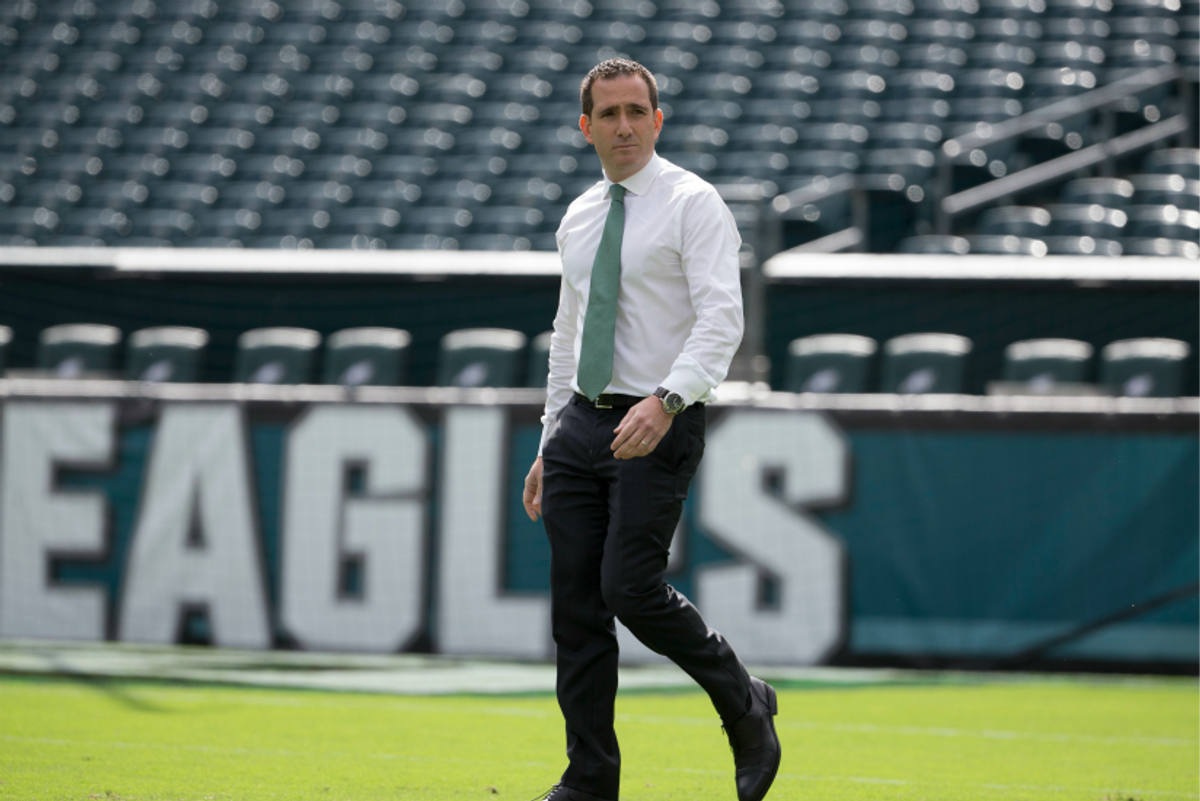
The Eagles consistently draft defensive linemen even when the depth chart looks strong. They don’t wait for collapse, they build against it. The decline of Fletcher Cox was subtle, but Howie Roseman was able to project it and plan for it. Getting players like Nakobe Dean, Jalen Carter, Derek Barnett and Josh Sweat restocked the defensive line even though it was already packed with talent.
Feed Premium Positions Relentlessly
Premium positions inflate rapidly:
Offensive Tackle
EDGE
Cornerback
Quarterback
(Often Wide Receiver or Interior Defensive Line depending on scheme)
When contenders stop investing here, decline is often only a season away.
Case Study: San Francisco 49ers
The 49ers continuously invest in defensive front depth. Even after paying Nick Bosa, they continued building the front. When they’ve struggled in January, it often traced back to offensive line depth — proof that premium neglect shows up in playoff football first.
Free Agency Should Solve Roles — Not Headlines
Contenders don’t win March. They win in January.
Free agency for contenders should focus on:
Defined system fits
Rotational contributors
Short-term precision additions
Value contracts that protect draft flexibility
Case Study: Baltimore Ravens
The Ravens rarely chase splash free agents. Instead, they build layered depth and role clarity. This was the blue print of Ozzie Newsome. He delivered the wisest 3 words in NFL draft history, "Trust your Board". It's what landed him Jonathan Ogden, a Hall of Fame Offensive Tackle in 1996. This was his "Best Player Available" approach.
Newsome's drafts were highly successful, producing 18 Pro Bowl players and over 60 combined Pro Bowl honors for the Ravens during his tenure to include, Ray Lews, Ed Reed, Terrell Suggs, Haloti Ngata, Ray Rice, Peter Boulware, and Joe Flacco. And in his final draft: QB Lamar Jackson, TE Hayden Hurst, OT Orlando Brown Jr., TE Mark Andrews
Where Contenders Fail
Sustained success requires discipline. When that discipline slips, windows shrink fast.
Failure Scenario 1: “One More Piece” Syndrome
Los Angeles Rams
Aggression delivered a title — but sustainability suffered. The Rams went all in to make a run to the Superbowl which worked, but they exhausted all valuable draft picks and exploded their cap with high priced veterans. While the short term worked, the long term has been a risky road to get back to prominence. After the Superbowl win, the roster fell apart, and players retired, or left to make more money somewhere else. The salary cap was diminished, so the rebuild took a number of years before they had quality depth.
Failure Scenario 2: Ignoring the Trenches
Buffalo Bills
The skill level of the Buffalo Bills had been one of the top in the league. Josh Allen is an MVP candidate each year, and their WR's were some of the best in the league where Stefon Diggs was having monumental seasons in Buffalo. The biggest issue was the lack of attention on both the offensive and defensive sides of the lines. There was a bigger push to add secondary and skill players instead of providing protection for their sought after QB. This ignorance has lead to the team having to pivot and shore up the areas to keep their QB protected while focusing more on a running attack with Jared Cook.
Failure Scenario 3: Late Succession Planning
New Orleans Saints
One delayed transition year can alter a franchise’s trajectory for seasons. This was primarily after the retirement of Drew Brees. The succession of QB was not laid out and seemed to be left for a placeholder. The Saints relied on the free agent QB instead of drafting and developing a QB for the long term success of the Saints with a smooth transition at the QB position. It's a gamble to roll the dice on free agent QB's to fill the role of a perennial pro bowler and future hall of famer and expect the same results.
The Architect vs. The Gambler
There are two types of general managers in the NFL:
The Architect
The Gambler
The Architect
An NFL General Manager (GM) "architect" type is the visionary leader responsible for building a team's roster, managing the salary cap, and scouting talent to create a championship contender. They bridge front-office, scouting, and coaching departments, with top examples including Howie Roseman (Eagles), Les Snead (Rams), and Brett Veach (Chiefs)
Draft Succession Before Crisis
You draft the replacement before the current starter declines. Nearly every rookie coming in from college needs time to acclimate to the speed, talent and overall aspect of the NFL pro game. This means recognizing the aging vet and drafting the replacement to develop and be available for when the veteran is ready to step down. If this is not addressed, there will be the alternative option which is not optimal to the team fit.
Example:
Your 31-year-old left tackle is still playing well — but his cap hit jumps next year. Instead of waiting for regression, you draft a tackle in Round 2 now.
Year 1: Development.
Year 2: Rotation snaps.
Year 3: Seamless replacement.
No panic. No emergency spending.
Invest Repeatedly in Premium Positions
You keep drafting EDGE, OT, CB, and QB even if the room “looks fine.”
Example:
You already have a starting pass rusher — but you draft another in Round 3. Why? Because injuries happen and playoff rotations matter. Preparation beats reaction. Use Free Agency with Precision. You sign players to fill football roles — not headlines.
Example:
Instead of signing a $20M wide receiver, you add:
A reliable nickel corner
A swing tackle
A rotational defensive tackle
They don’t trend online. But your roster doesn’t collapse when injuries hit.
Maintain a Depth Pipeline
This may seem hypocritical, but isn't the idea not to draft for need? Yes, and if you are drafting the best player available, that makes sense, you won't draft for need, but still get value at every draft pick. Free agency is where you sign for need and fill with role players, the draft is where you build depth and add successors. Every starter has a developmental successor.
Starter → Drafted backup
Backup → Special teams contributor
Veteran leaves → Young player promoted
You’re never rebuilding a position from scratch.
Avoid Emotional Decision-Making
You don’t overreact to one playoff loss.
Example:
You lose due to lack of pass rush. The gambler trades two first-round picks for a 30-year-old EDGE. The architect drafts one in Round 1, adds another on Day 3, and signs a short-term rotational veteran. Layered beats desperate.
The Gambler
The gambler thinks in windows — not timelines.
The mindset is: “We’re close. Just one more piece.”
Trading Premium Picks for Aging Veterans
Short-term spike. Long-term squeeze.
Extending Veterans One Year Too Long
Loyalty overrides projection.
Cap space disappears. Development stalls.
Ignoring Depth Because “Our Stars Are Good”
Injuries hit.
There’s no fallback.
Pushing Cap Risk Beyond the Window
For years, the Commanders and Cowboys were the definition of restructuring the cap to pay later. They sign big names to big contracts with big signing bonuses and the signing bonuses, while paid up front, were stretched over the life of the contract to avoid the large cap number. The issue with a contract structured like that, if the player was released or traded, the value of the signing bonus all comes due and is counted against that years salary cap. This is called Dead Cap Space and can cripple a team over the long term if there are enough players who fell within that category. The Collective Bargaining Agreement (CBA) had outlined this to avoid the stacking of contracts all up front and reducing the risk of this kind of situation.
The Difference in One Sentence
The architect asks:
“What will this roster look like in two years?”
The gambler asks:
“How do we win right now?”
Championships can be won either way.
Dynasties are built one way.
Closing Thought
The concept that anyone can step in and be a better General Manager than the current guys in their respective office, are clearly not understanding the full scope of the roster, how its built, and the risks that are inherent with the position. Ultimately, roster building is a risk management position where the stakes are high and the rewards are higher.
Through a clear and defined path, the General Manager can succeed if they can understand what type of team they are when January comes around.